Shower thought: using a tool like cargo-semver, could you build a package registry where the uploader never chooses the version number?
E.g. your last release was 5.2025-09-13 and you've just changed a type, so today's release is 6.2025-11-05.
One advantage I've come to appreciate about Dash/Zeal docsets: it's really nice having focused search.
The text search is constrained to the languages I care about enough to download the docset, substantially increasing the relevance. In Google I'd need to specify the language.
I'm playing with Zeal/Dash so I can view stdlib docs offline.
(I've been coding on public transport recently, without a reliable data connection.)
Anyone have tips for making the most of this setup? AFAICT docsets are basically HTML underneath.
GIMP is huge tool that I certainly haven't mastered, but it's so useful to have around.
I used it this week to convert images from obscure formats to common ones. It's a great swiss army knife and runs everywhere.
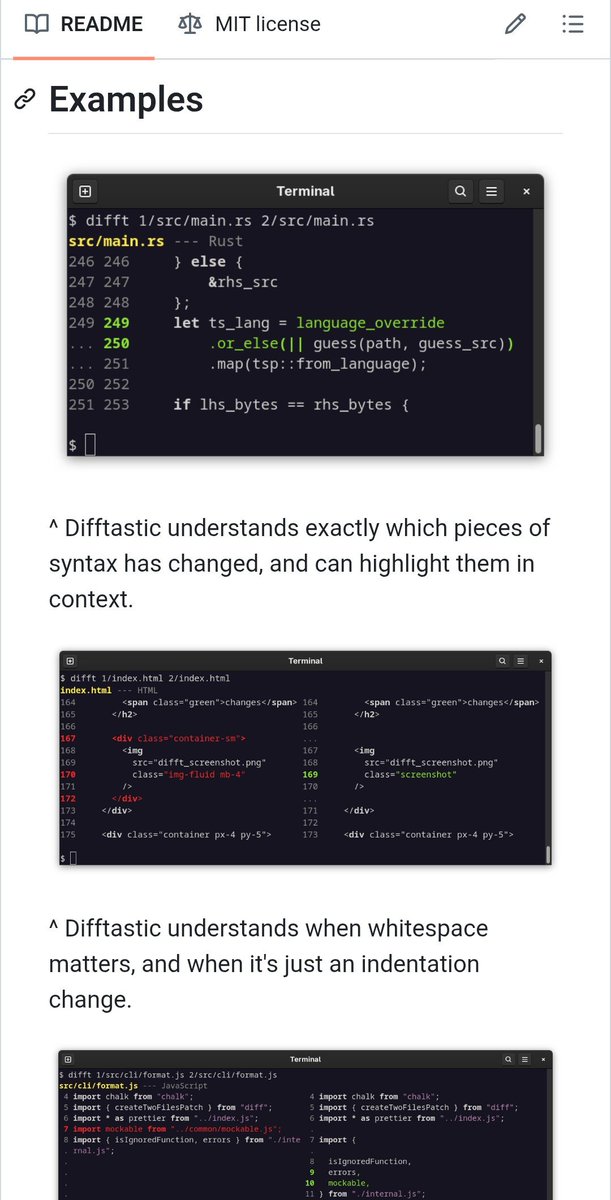
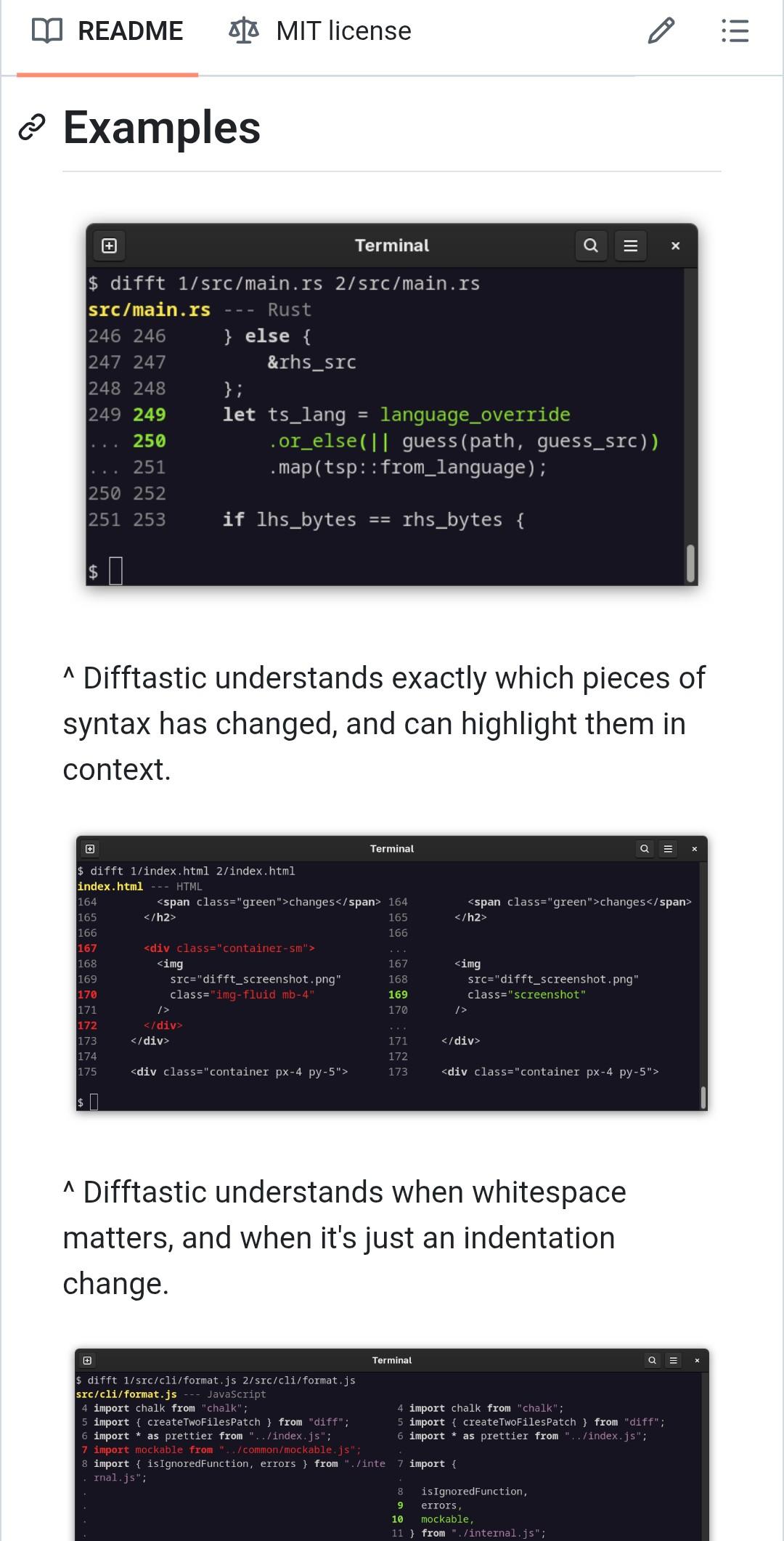
It is *really* hard to find a good screenshot for a CLI tool when users are on a mobile browser.
This is the best I've come up with so far. I'm showing the terminal GUI to show where you'd use the tool.
I'm also trying several standalone screenshots to make it more comprehensible.
I've added syntax highlighting to the prompt of my programming language!
It's not strictly necessary, but it's nice to have. It caught a bug with lexing incomplete string literals too.
One interesting aspect of collecting coins in a platformer like mario: it makes the level stateful.
You can see if you've been somewhere before based on whether there are coins present.
Ooh, difftastic is now listed on the official git website!
It's so hard to talk about probabilities. Casual conversation often conflates 'the likelihood of an event happening' with 'how strongly I believe in my assessment'.
For example, I'm very confident (say 90%) that the coin in my pocket is 50% likely to land on heads.
I see that *up has become an increasingly common name for toolchain installers: rustup, ghcup, even juliaup.
I think Rust was the first to use this terminology? I'm curious how similar the different *up tools are.
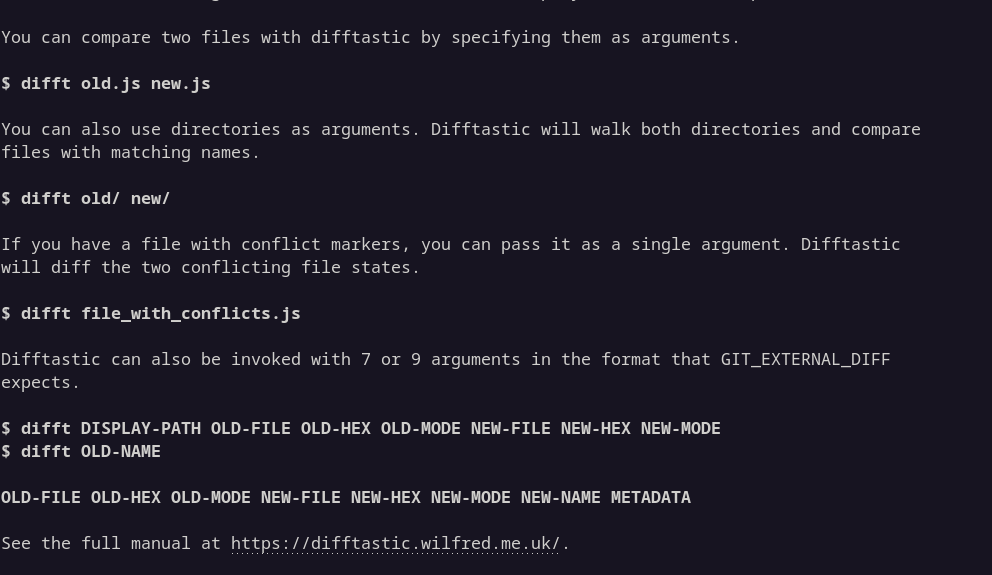
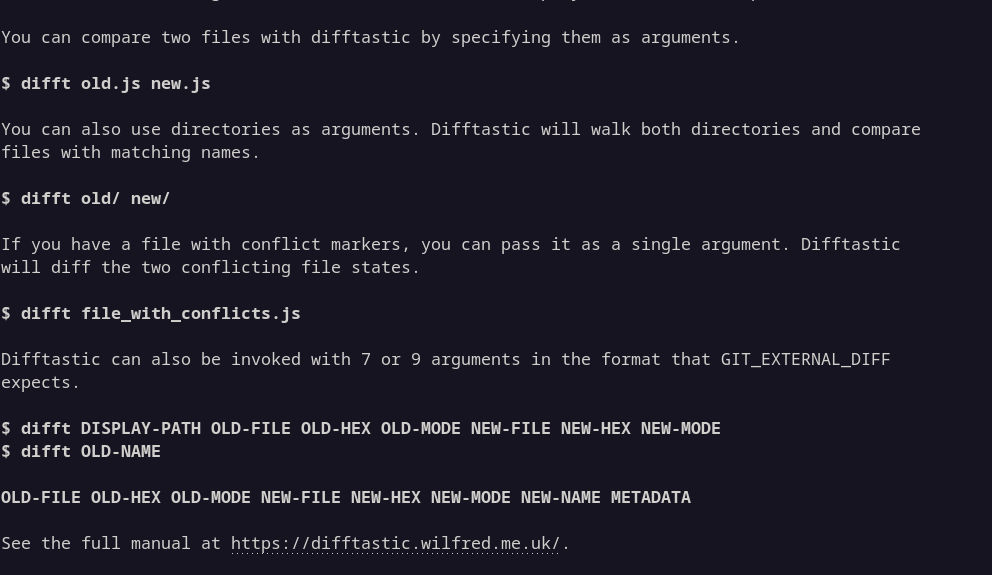
I'm trying to improve the readability of the --help output from difftastic.
I'm experimenting with making example invocations bold, so they are easier to distinguish from the text.
I'm also trying OSC 8 to make my URLs clickable.
Opinions welcome :)
I would have thought that invoking a C compiler would be a solved problem. Looking at Rust's cc crate there's a remarkable long tail of corner cases to fix.
Exotic CPUs, microarchitectures, compiler differences, operating system differences, etc.
LLMs seem to handle dependency upgrades really well.
The task is well-specified, there's usually a build/test suite to check correctness of the modifications, and there's often a changelog they can consume too.
Do any tech streamers try new software live? It'd be a really fun way of doing UX testing.
For hobby projects, I really like software where I can do small features or tweaks. Sometimes I don't have time for anything more substantial.
Website projects are great for this. Are there other areas?
Showing 151-165 of 7,652 posts